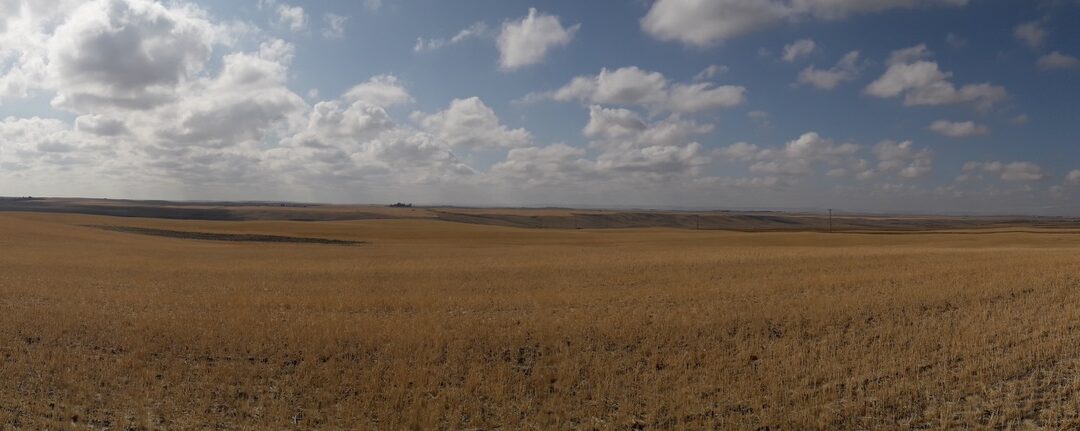
I grew up on a farm in southern Alberta, where the days started before sunrise and ended long after the sun went down. Like every farm family I knew, ours ran on the labour of everyone and that included my mother. She didn’t just support the farm. She was the farm: seeding decisions, crop management, the books, the harvest, the worry. And she did all of that while also working full-time off the farm, as one of the founders of Alberta’s natural gas cooperative system, an institution that transformed rural energy access across the province. The idea that farming was a man’s domain was never a reality I recognised growing up. It was, and always had been, a partnership… though one in which women’s contributions were far too often invisible to the wider world.
That invisibility is what the United Nations is working to dismantle with its designation of 2026 as the International Year of the Woman Farmer.
The Numbers Tell a Compelling Story
Women account for an estimated 43 percent of the global agricultural labour force, a figure that rises to more than 60 percent in parts of sub-Saharan Africa and South and Southeast Asia. They grow the food that feeds their families and communities. They manage seeds, tend livestock, process harvests, and carry produce to market. In developing nations, women farmers produce the majority of food consumed at the household level.
And yet, across the value chain, from access to land and finance, to inputs, technology, training, and market linkages, women face structural barriers that their male counterparts do not. Globally, women farmers receive less than 10 percent of agricultural credit. They are less likely to hold legal title to the land they work. They are underrepresented in agricultural cooperatives, commodity associations, and policy tables. The gender gap in agricultural productivity is not a gap in effort or ability. It is a gap in access and equity.
The Value Chain Has a Gender Problem
It would be a mistake to frame women’s role in agriculture as confined to subsistence or smallholder farming. Women are present across every segment of the agricultural value chain. In Canada, women own or co-own roughly 28 percent of farm operations, and that number is growing. They are agronomists, veterinarians, commodity traders, food scientists, and supply chain managers. They lead agri-food businesses and rural community organisations.
In developing nations, women are not only producers they are processors, distributors, and the primary managers of household food security. When we fail to support women at any point in that chain, we do not simply shortchange them. We shortchange entire communities, and we shortchange the global food system’s resilience.
The Food and Agriculture Organization estimates that closing the gender gap in agricultural inputs alone could increase yields on women’s farms by 20 to 30 percent, which is enough to lift between 100 and 150 million people out of hunger. This is not a fringe figure. It is a staggering indictment of what we leave on the table when we overlook women farmers.
A Call to Agricultural MNCs: Back the People Already Doing the Work
At BBS, we are working at the intersection of business and community impact. Agriculture runs through our network of causes, and in project after project, the organisations delivering the most meaningful change for women farmers are not large institutions but local nonprofits embedded in the communities they serve. They have the trust, the cultural knowledge, and the relationships that no multinational can replicate from a head office. What they often lack is resources.
This is where agricultural multinationals can make a decisive difference. The ask is not to build new programmes from scratch but to support the ones already working. Financially, that means directing a meaningful share of community investment toward local nonprofits running women’s agricultural programmes, with multi-year commitments that allow real planning rather than project-to-project survival. In terms of knowledge, it means opening up agronomic expertise, technical training, and market access know-how and deploying skilled employees as mentors and advisors alongside organisations on the ground. Beyond money and expertise, MNCs can amplify: using their platforms, networks, and government relationships to advocate for the policy changes that allow women farmers, and the nonprofits supporting them, to thrive.
The return on that engagement is real. MNCs that invest at the grassroots level build something no marketing budget can buy: trust. That trust translates into supply chain resilience, stronger footholds in emerging markets, and a reputation that resonates with a generation of consumers and employees who expect business to stand for something.
The Lesson From a Prairie Farm
I think often about my mother and the women like her across the prairies who are managing crops, running households, building institutions, and holding communities together, all largely uncredited in the official story of Canadian agriculture. My mother helped create the infrastructure that brought affordable energy to rural Alberta. She did it while farming. She did it while raising a family. And she did it in an era when women in leadership was not just uncommon. Her experience was not unique to Canada. The same story plays out on rice paddies in Bangladesh, on smallholder plots in Kenya, on hillside terraces in Peru. Women have always been farmers, builders, and leaders. The world has simply been slow to see them as such.
The UN’s International Year of the Women Farmer is an invitation to change that, and not just in how we speak about women in agriculture, but in how systems are built, resources are allocated, and power is shared. Business for Better Society is committed to holding that invitation open in every boardroom, supply chain conversation, and policy discussion we are part of.
Because the women who feed the world have earned more than a year in their honour. They have earned a seat at every table where decisions about agriculture, trade, finance, and food are made.