For a child who has completed primary school, moving on to secondary education should be a natural next step. For many families in Uganda, however, it is also a significant financial challenge.
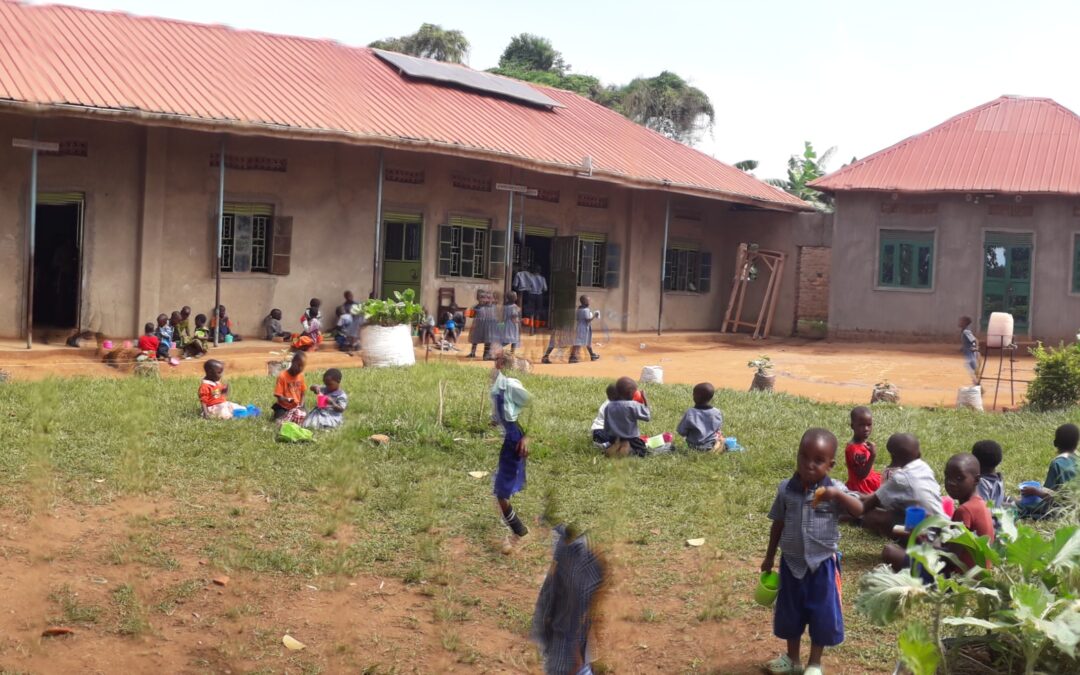
We wish to thank Study Abroad Lists for recognising these challenges and sponsoring the tuition of a young man who graduated from Sserinya Primary School and is now continuing his education in high school.
He has reached an important milestone, but secondary school brings additional costs. In his case, he is now a boarding student, increasing the overall cost of his education compared with his years at Sserinya Primary School. The sponsorship from Study Abroad Lists is helping make it possible for him to continue his education rather than having his schooling interrupted at the point of transition.
The challenge is much bigger than one student.
Uganda has made significant progress in getting children into school, but keeping them there becomes increasingly difficult as they progress through the education system. UNICEF reports that financial barriers remain the main reason cited for non-attendance and dropping out at secondary level. Its 2024 analysis found that around 30% of secondary students drop out before completing their education.
More recent analysis published by UNESCO in 2026, drawing on Uganda Bureau of Statistics data, reports that 60% of households identify the cost of schooling as the main reason for dropout.
The cost of education also changes considerably as children move into secondary school. World Bank analysis of Uganda’s 2019/20 household survey found that expenditure per student at lower secondary level was equivalent to approximately 19% of average household income, rising to 42% at upper secondary level. Household education costs can include school fees, books and supplies, uniforms, examination fees, transport and, for some students, boarding.
These figures help put this sponsorship into perspective. Continuing education is not simply about paying another year’s tuition. For a family already working within limited financial resources, the additional costs associated with secondary school can determine whether a child is able to continue at all.
There is also a wider value to keeping young people in education. Education helps young people develop the knowledge and skills they need for further study, employment and participation in their communities. World Bank research continues to find a strong relationship between additional years of schooling and higher earnings, with its latest global analysis estimating that an additional year of schooling increases earnings by around 10% on average.
For this Sserinya graduate, Study Abroad Lists’ support provides something very practical: the opportunity to keep moving forward.
At BBS, we believe that supporting education is about more than helping a child reach the next school year. It is about creating the opportunity for a young person to continue developing their skills, broaden their future choices and build on the foundation established during their primary education.
We thank Study Abroad Lists for helping this young man take his next step.