Some of the most meaningful development work begins with a simple idea: equip local people with practical skills that continue creating impact long after a project ends.
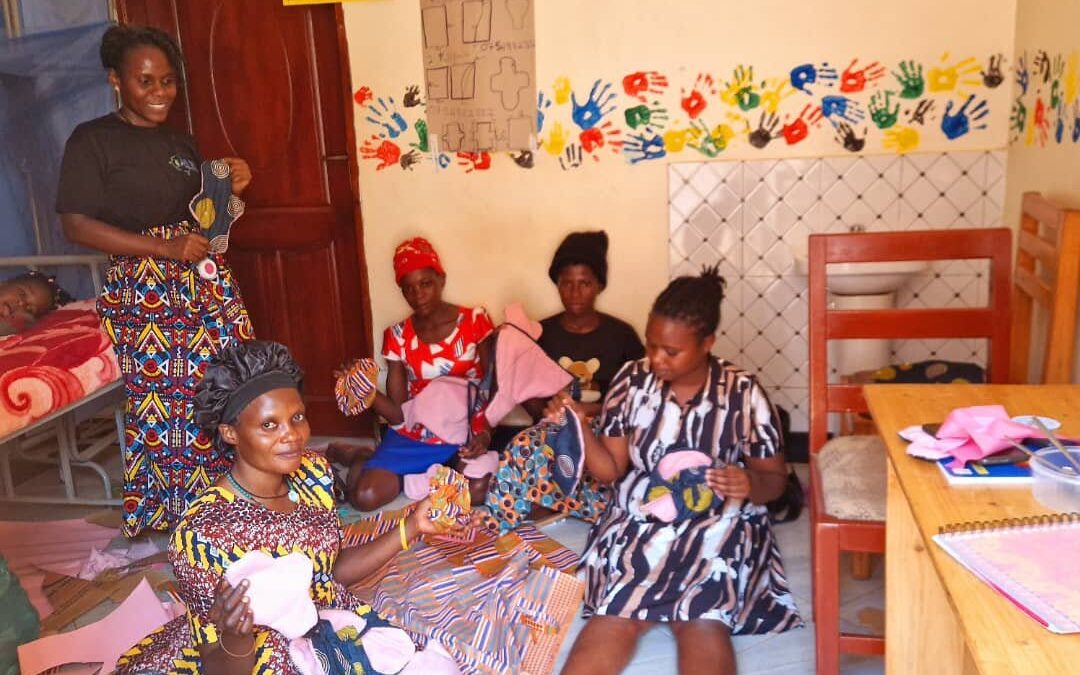
Recently, Business for Better Society (BBS), in collaboration with the Laudara Foundation, supported a train-the-trainer program in Ndegeya, Uganda. The participants included the midwife from the Mother Child Care Centre (MCC) in Ndegeya and three women nominated by village leaders for their commitment to serving their communities in Ndegeya and Sserinya. Together, they completed a practical program that enables them to teach women and girls how to hand sew, use, and care for reusable sanitary pads and reusable diapers using simple materials that are readily available within their communities.
Rather than providing a one-time distribution of products, the initiative invests in local knowledge and leadership. By training individuals who are already trusted within the community, the project creates the foundation for practical skills to be shared with many more women and girls in the months and years ahead.
Addressing a Fundamental Need
For millions of girls across sub-Saharan Africa, managing menstruation remains a significant barrier to education, health, and opportunity.
According to UNICEF, UNESCO, and other international organisations working in menstrual health, many girls lack access to affordable menstrual products, safe sanitation facilities, and accurate information about menstrual health. Research has shown that inadequate menstrual hygiene management contributes to school absenteeism, while many girls rely on improvised materials such as old cloth, mattress stuffing, newspaper, or other unsuitable alternatives because commercial products are simply unaffordable or unavailable.
These materials often cannot be cleaned or changed safely, increasing the risk of irritation and infection. Missing even a few days of school each month can have a cumulative effect on educational outcomes, confidence, and future opportunities.
Reusable sanitary pads offer a practical, sustainable solution. When properly made and cared for, they can provide reliable menstrual protection for years while significantly reducing household costs.
The products taught during this training are sewn entirely by hand, making the skills accessible to women regardless of whether they have access to electricity or sewing machines. Using simple materials and hand-sewing techniques means the knowledge can be shared widely and adapted in even the most resource-constrained communities.
The reusable diaper component of the training responds to another important challenge facing many families. Disposable diapers are often prohibitively expensive in rural communities, making reusable alternatives an effective way to reduce household expenses while supporting infant health and hygiene.
Building Strong Partnerships
The workshops were delivered by Hindura Recycling Initiative (HRI), a long-standing BBS collaborator. HRI first delivered this training in the Adjumani Refugee Settlements, where women and girls learned how to hand sew reusable sanitary pads using locally available materials.
Equally important was the role of the Laudara Foundation, whose team provided the local coordination, community engagement, and on-the-ground support that made the training possible. Working closely with village leaders, Laudara helped identify participants who were well positioned to share these skills with others and extend the impact of the program throughout the community.
This collaboration reflects the way Business for Better Society approaches community development. We believe lasting impact is created by working alongside trusted grassroots organisations that understand the communities they serve. By combining local leadership with practical expertise and shared resources, we can help communities build solutions that continue long after a project has concluded.
Looking Ahead
Development is most effective when knowledge stays within the community.
By investing in local trainers rather than delivering one-time workshops, this initiative creates capacity that will continue long after the training has ended. Four women may seem like a modest beginning, but each now has the opportunity to share these practical skills with many others. As that knowledge spreads, it can help improve health, reduce financial pressures, support girls to remain in school, and strengthen the resilience of the community.
At Business for Better Society, this is why we invest in grassroots partnerships. Lasting change happens when communities have the knowledge, confidence, and resources to lead their own solutions. This project in Ndegeya is another example of how local collaboration can create practical, sustainable solutions that continue making a difference long after the workshop has ended.